REVIEW · BRISBANE
Sunshine Coast: Scuba Dive the Ex-HMAS Brisbane Ship Wreck
Book on GetYourGuide →Operated by Sunreef Mooloolaba · Bookable on GetYourGuide
This wreck session is like a floating city. The Ex-HMAS Brisbane sits just 2.9 nautical miles offshore, and Sunreef’s setup lets you see a huge amount of the hull without racing. I like how the boat uses two midship moorings for an easy rhythm, and how the ship holds that classic, bolt-upright shape that’s made for good viewing.
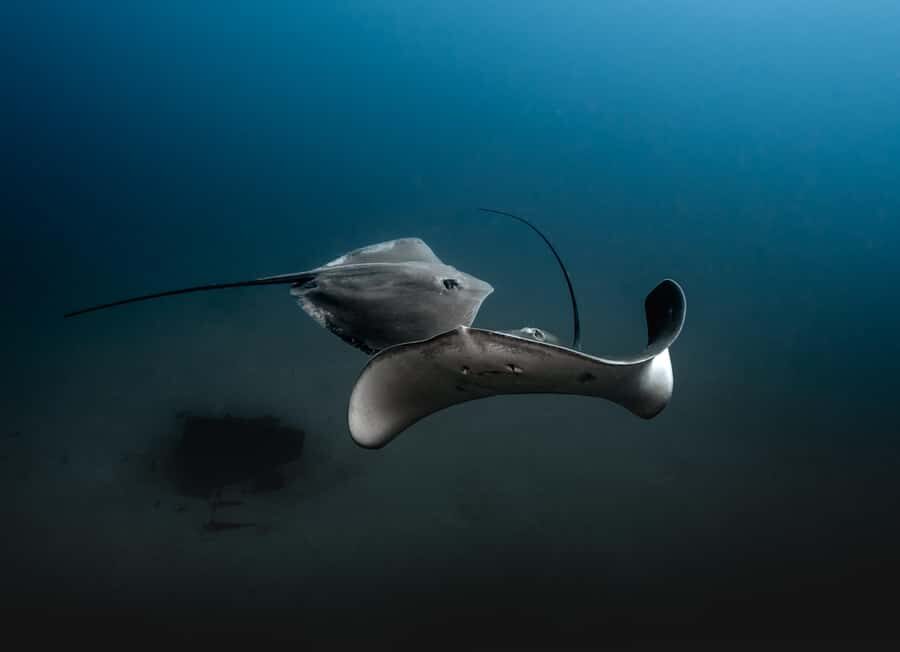
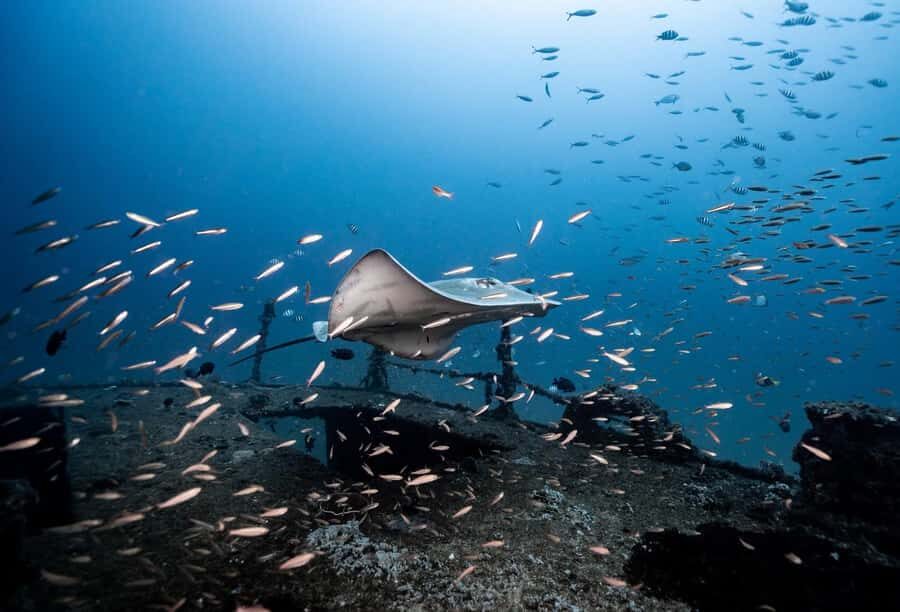
What I really love is the life you’re likely to meet around the structure. You can reasonably expect big bull and eagle rays, turtles, kingfish buzzing bait fish, and even an octopus that has taken over a pyrotechnic tube on deck. One more thing I like: the wreck is built to be lived on now, with soft corals and hard corals established over time.
The main drawback is temperature and gear. Expect winter water around 17°C, and one diver even shivered in 5mm gear, so take thermal prep seriously and don’t assume standard rental kit will feel warm enough.
In This Review
- Key things that make this wreck session special
- Ex-HMAS Brisbane off Mooloolaba: why this wreck is a must-see
- How the 5-hour schedule actually plays out (and why timing feels sane)
- What you’ll see on the Ex-HMAS Brisbane: exterior hull, engine room, control room
- Marine life highlights: rays, turtles, grouper, kingfish, and that odd octopus
- Water temperature and visibility: your suit is the real decision here
- Price and value: what you pay for, what you don’t, and where extras appear
- Who this works for (and who should skip it)
- Safety basics you can’t ignore (especially for inside sections)
- Should you book the Ex-HMAS Brisbane wreck session?
- FAQ
- How long is the Ex-HMAS Brisbane experience?
- Where does the trip start?
- How much does it cost?
- Do I need to bring scuba equipment?
- What certification do I need?
- What water temperatures and visibility should I expect?
- Is a torch required?
- Are there any age or pregnancy restrictions?
- Can I cancel and get a full refund?
Key things that make this wreck session special
- The Ex-HMAS Brisbane is a whole shipwreck system, not just a wreck-shaped landmark, with exterior viewing plus access to inside sections
- Two midship moorings help you cover more of the vessel comfortably and safely on a 5-hour outing
- Marine life is part of the plan, not a maybe: turtles, rays, grouper, kingfish, squid, and octopus are regularly reported
- Consistent clarity and minimal swell mean the conditions are often friendly for planning your time underwater
- Winter-to-summer temperatures are a wide swing, so your suit choice matters as much as your buoyancy skills
- Penetration entries require a torch, so factor in the extra cost if you don’t bring one
Ex-HMAS Brisbane off Mooloolaba: why this wreck is a must-see
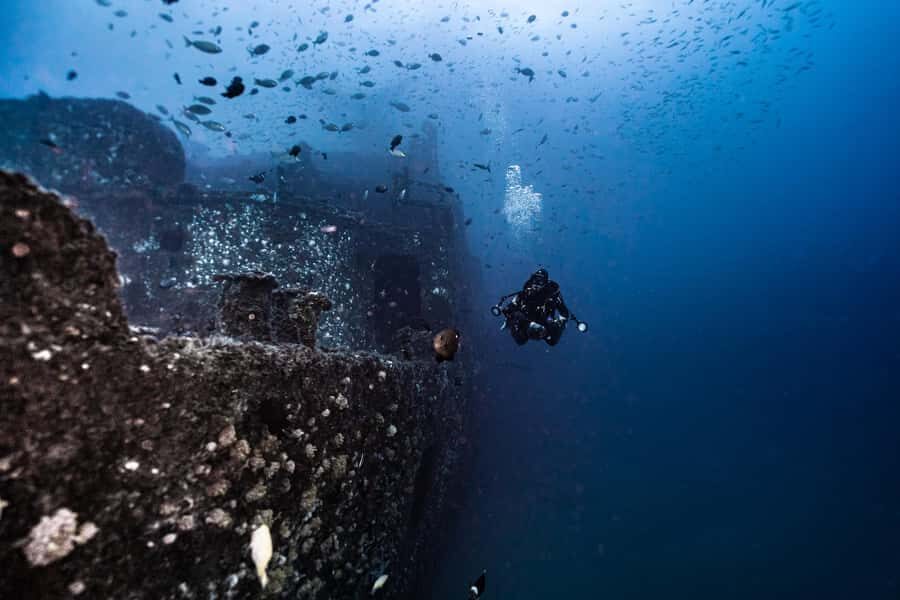
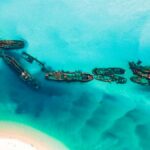
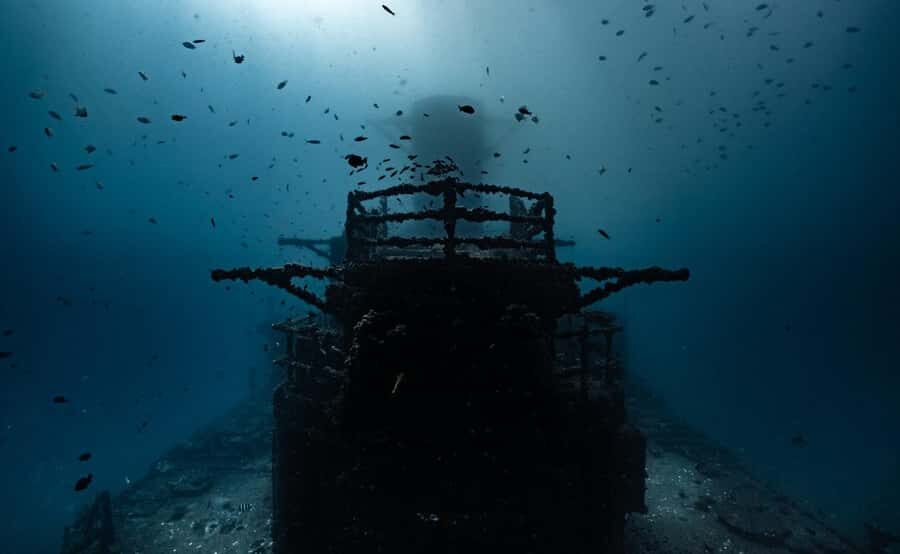
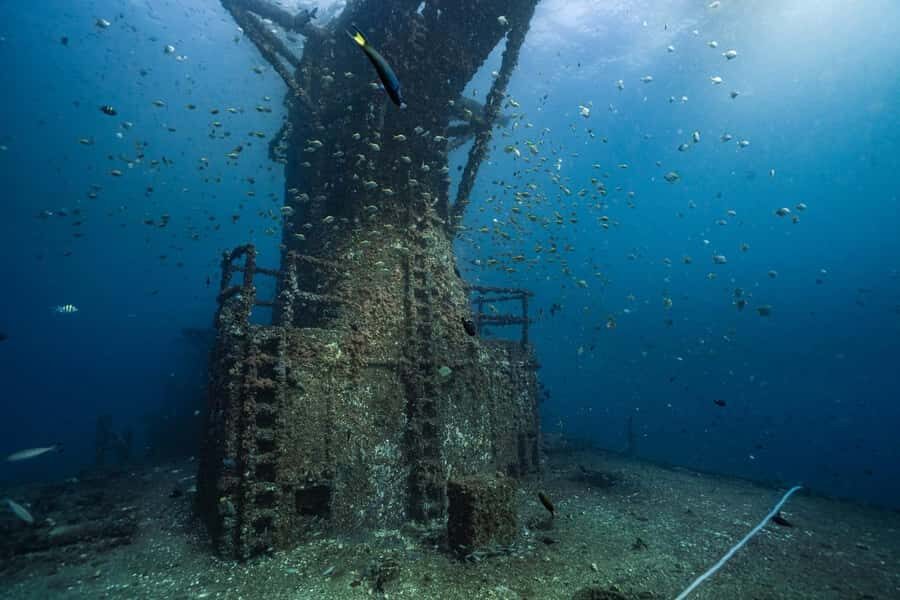
If you’re the type who likes your underwater memories to have scale, the Ex-HMAS Brisbane delivers. This is a decommissioned destroyer (a guided missile ship) that now functions as an artificial reef and a major scuba site off Queensland. It sits upright, so you’re not hunting for the “rest of the ship” under sand and rubble. The forward decks are about 15 meters under you and the stern sits around 18 meters down, which helps the wreck feel approachable, piece by piece.
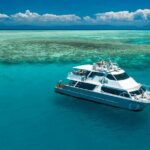
Sunreef runs the trip from Sunreef Mooloolaba, and the journey out is short enough to feel relaxed. Two things make the site especially compelling for planning: first, it’s available all year round; second, it’s been studied by scientists connected with the University of the Sunshine Coast and the Queensland Museum, with government environmental oversight. That matters because it’s not just a random metal pile. You’re visiting a wreck that has become habitat.
And yes, the ship’s size is the first wow moment. Even cruising around the outside, you get the sense of moving alongside something engineered to be seen from every angle. When you add the marine life around the structure, it turns into more than “wreck photos.” It becomes an ecosystem.
Other Sunshine Coast and Noosa day trips from Brisbane


How the 5-hour schedule actually plays out (and why timing feels sane)
This outing is built around a simple flow: get briefed, get out there, spend quality time on the wreck, then cruise back with plenty of time to recover.
Here’s the practical order:
- You start at Sunreef Mooloolaba.
- There’s a 15-minute safety briefing before anyone hits the water.
- You head out on a boat for about 30 minutes.
- Then you get roughly 3 hours on the water for the underwater portion, guided by qualified PADI staff.
- Finally, it’s another 30-minute cruise back.
The “why it feels sane” part is Sunreef’s mooring plan. They exclusively use the two midship moorings, which helps keep logistics tidy. Instead of constantly relocating, you can do a couple of easy, well-supported underwater sessions that let you cover the wreck more thoroughly.
The conditions often help too. The site is known for consistently good visibility and minimal swell, which means you’re not fighting choppy conditions while you try to enjoy the structure and marine life.
What you’ll see on the Ex-HMAS Brisbane: exterior hull, engine room, control room
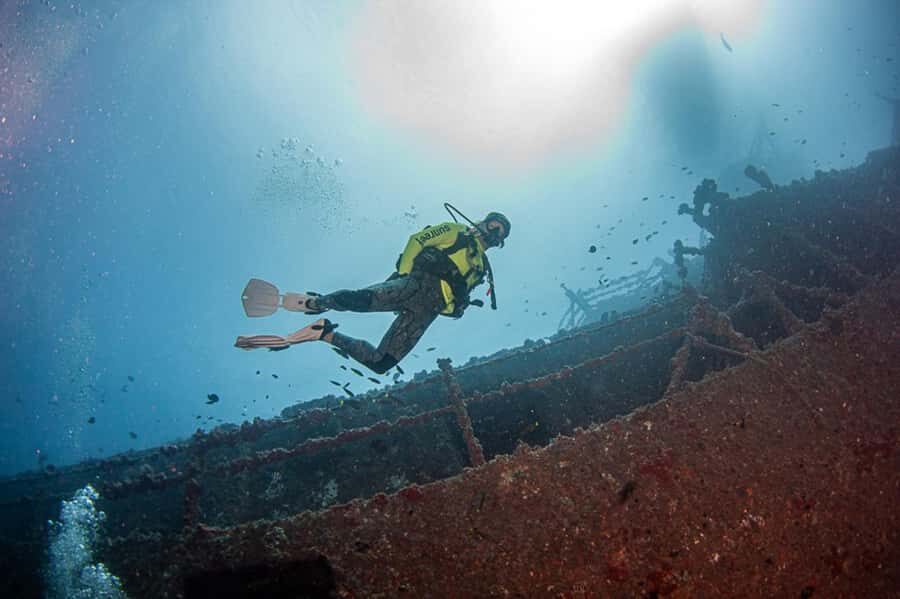
The wreck is famous for being both huge and structured. You’re not limited to walking the outside and hoping for the best. You can also visit deeper sections of the hull and access inside areas like the engine room and the control room.
From the outside, the ship’s shape makes navigation easier. You can line yourself up visually—funnels, deck features, and the big hull surfaces are clear reference points. That matters for comfort, especially if you’re working on your own buoyancy and trim. It’s also where you’ll likely notice the most variety in fish behavior: bigger predators cruise corridors, smaller fish form clouds around the structure, and rays often use the open areas between major features.
Then you get the inside access options. The engine room and control room add a different feeling: you’re no longer just watching life around metal. You’re seeing how it sits together, and you may even notice details like the ship’s kill switches still intact in the control room area.
There’s one key rule for inside sections: a torch is required for penetration entries. If you don’t have one, there’s an extra charge option. In plain terms, don’t show up thinking your dive light is optional. Plan it like you’d plan for a restaurant reservation: you’ll want the tool ready, not improvised at the dock.
Marine life highlights: rays, turtles, grouper, kingfish, and that odd octopus
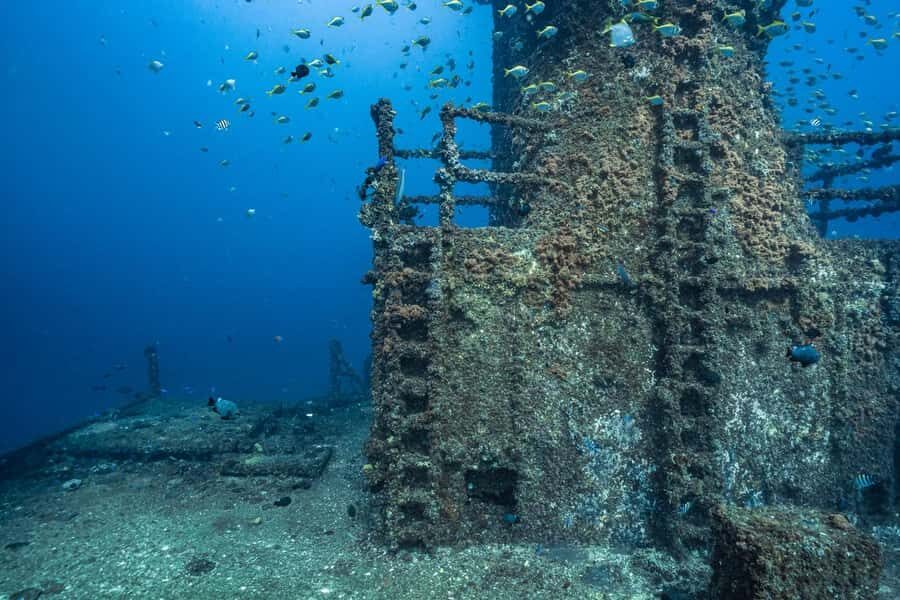
This is the part that turns many people into repeat wreck-visit fans. The Ex-HMAS Brisbane has a reputation for hosting a wide mix of marine species, and the site’s established habitat shows up across seasons.
From the information on the site, here are common-life highlights you may encounter around the vessel:
- Large bull and eagle rays
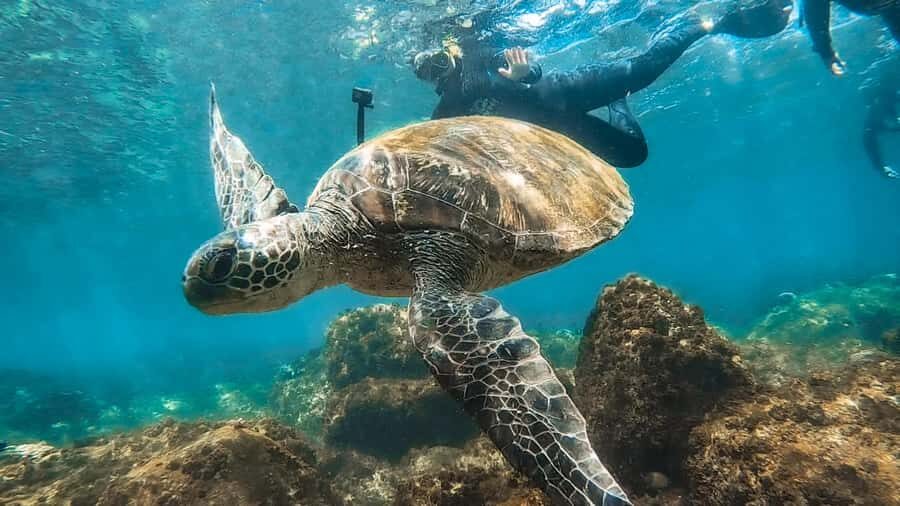
- Turtles (including one reported resident on the aft funnel)
- Eagle rays cruising between funnels
- Schools of juvenile red emperor and snapper
- Yellow-tailed kingfish buzzing around schools of bait fish
- Up to 10 giant Queensland grouper spotted near the bow
- Shovelnose rays, greasy cod
- Lionfish, blennies, nudibranchs, sea hares, squid
- Soft corals with hard corals increasingly established
One memorable detail is the octopus. It’s been reported living in a pyrotechnic tube on the deck. That kind of detail is exactly why wreck sites can beat reef sites for pure curiosity. You’re not just watching fish swim by—you’re reading the wreck like it’s a neighborhood.
The rays and turtles also change your underwater “route.” Instead of just looking at the ship, you’ll start scanning the space between features. When kingfish start moving through bait clouds, your attention will naturally flip from metal to motion.
Water temperature and visibility: your suit is the real decision here
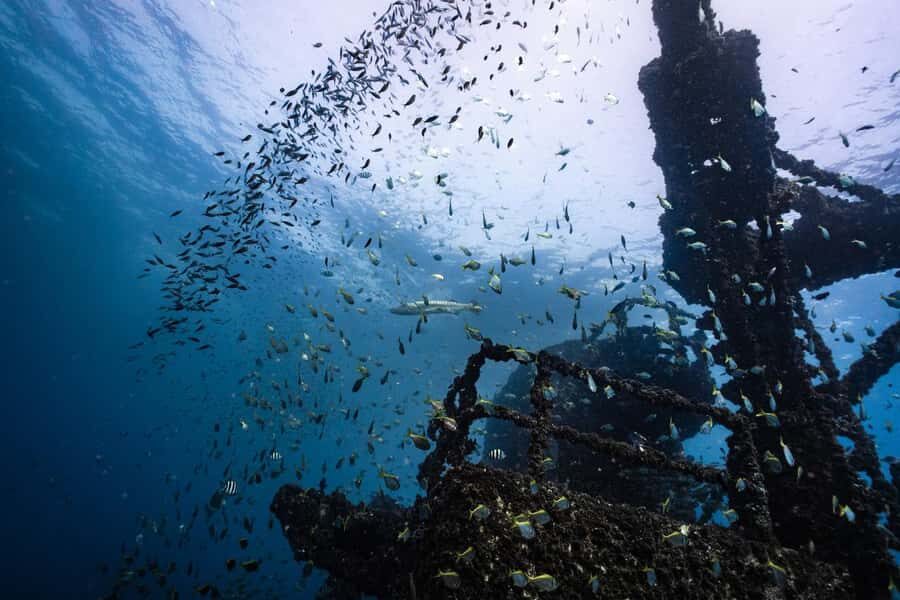
This trip can be excellent year-round, but the water temperature is not subtle. Expect 17°C in winter and up to 27°C in summer. Visibility averages around 15 meters, with 20 meters or more not unusual.
What I’d do if I were choosing my own gear for this outing: prepare for the colder end first. One diver reported being shivering cold even with a 5mm wetsuit, and they were hot afterward thanks to hot soup waiting on the boat. That’s a big comfort upgrade after you get out, but it doesn’t fix the hard part underwater—especially if you’re sensitive to cold.
Another account points out that 22°C can still feel too cold with inadequate gear. That diver described 5mm gear as insufficient and mentioned open fins causing blisters and skin injuries. They also noted the boat had chips and coffee, but they found it odd there wasn’t water provided.
So here’s the practical takeaway: if you tend to get cold, don’t gamble on “it’s not that cold today.” Bring the thermal add-ons you know work for you—hood, gloves, and proper exposure protection are worth considering. If you’re hiring scuba equipment, ask about what thermal options are available and how well they fit you.
Also remember the basics you’re likely to use before you even get in the water:
- Biodegradable sunscreen (important in marine areas)
- A towel
- Your dive log
- Swimwear for the start of the day
Other scuba diving tours in Brisbane
Price and value: what you pay for, what you don’t, and where extras appear
At $133 per person for a 5-hour outing, you’re paying for the boat time, site access permissions, and guided instruction. Included in the price are:
- Return boat trip
- Light snacks
- Marine Park permits
- Qualified PADI staff to guide your underwater session
What’s not included:
- Scuba equipment
- Camera hire (if you want one)
- Hotel pickups
This is where value thinking helps. If you already own reliable gear, your cost stays clean. If you need to hire equipment, or if you decide you want a camera, your final spend will rise quickly. There’s also the torch requirement for inside access, and that can have an extra charge.
Still, the value is strong because you’re not just doing a short “see a wreck corner” experience. Sunreef’s moorings and the way the outing is structured help you experience a large portion of the ship, plus inside sections, with good water conditions. For a site like the Ex-HMAS Brisbane, permits and experienced guidance are part of what makes the wreck visit smooth.
Who this works for (and who should skip it)
This is not a casual “first time in the water” outing. To participate, you must be a certified diver. The requirement is:
- Hold a current scuba diver certification, or at least open-water certification
- You must have been scuba diving within the past two years
You also need to bring your certification card (physical or digital) and sign a diver statement before getting in the water.
Pregnancy rule: pregnant women are not allowed.
If you’re at open water level, this can still be a great match because the wreck is upright and the mooring setup supports a more organized underwater flow. The site information also mentions that a wide range of experienced divers enjoy it, including Instructors and dive shop owners, and even ex-servicemen who served on HMAS Brisbane. That’s not just trivia—it suggests the wreck has enough structure and interest to keep skilled divers happy.
If you’re uncomfortable with cold water, or if your buoyancy skills aren’t steady yet, make thermal and comfort choices a priority. Inside access adds another layer of planning because you’ll need a torch and you’ll be moving through confined spaces.
Safety basics you can’t ignore (especially for inside sections)
The trip includes a safety briefing and is guided by qualified PADI staff, which helps. But you’re still responsible for the basics that keep things safe.
Key points to take seriously:
- Penetration entries require a torch. If you don’t have one, plan for the extra cost.
- Bring your certification card and be ready to sign the required diver statement.
- Follow any instructions about time underwater and where you’re allowed to go.
- Cold water changes how you move. Keep your hands protected if you’re using gloves and make sure your gear fit feels solid.
One small planning tip from real-world cold: if you run cold easily, consider asking for the best thermal option available before you gear up. Don’t just accept the first thickness number you hear. Comfort affects focus, and focus is what you want around a wreck with lots of features to observe.
Should you book the Ex-HMAS Brisbane wreck session?
Book it if you:
- Want a classic shipwreck that’s upright and big enough to explore with structure
- Like marine life that includes rays, turtles, and large school behavior around the wreck
- Are comfortable handling cold water conditions with the right suit and accessories
- Have a certification and are ready to follow rules for inside access (including the torch)
Skip or rethink it if:
- You know you struggle with cold and you haven’t planned thermal protection beyond a basic wetsuit
- You’re not comfortable with penetration-style planning (torch, restricted areas, extra attention)
If you do book, my best advice is simple: don’t treat this as a warm-water reef day. Plan for cold, pack smart, and use the hot soup moment as your reward—because once you’re out, you’ll probably appreciate how much the wreck and the life around it are worth the effort.
FAQ
How long is the Ex-HMAS Brisbane experience?
The experience runs about 5 hours total.
Where does the trip start?
It starts at Sunreef Mooloolaba.
How much does it cost?
The price is $133 per person.
Do I need to bring scuba equipment?
Scuba dive equipment is not included. You can hire equipment for an additional cost on the day, and a dive torch may cost extra if needed.
What certification do I need?
You must be a currently certified diver, or at least open-water certified, and you need to have been scuba diving within the past two years.
What water temperatures and visibility should I expect?
Water temperatures range from about 17°C in winter up to 27°C in summer. Visibility averages around 15 meters, with up to 20 meters or more possible.
Is a torch required?
Yes. A diving torch is required for penetration entries into parts of the wreck.
Are there any age or pregnancy restrictions?
Pregnant women are not allowed to participate.
Can I cancel and get a full refund?
Yes. Free cancellation is available up to 3 days in advance for a full refund.