REVIEW · BRISBANE
Vice City – Fortitude Valley’s True Crime Tour
Book on Viator →Operated by Dark Stories Pty Ltd · Bookable on Viator
What made Brisbane’s underworld so effective—and so ugly? This walking tour strings together 1980s corruption, real crimes, and the places people still talk about in Fortitude Valley. You’ll trace scenes tied to the Fitzgerald Inquiry’s corruption work, hear about the Underworld kingpins, and spot what used to drive the nightlife economy.
I like the tight format: about 1 hour 30 minutes, on foot, with a mobile ticket that keeps things simple. I also like that it isn’t just lurid gossip. It connects glamour, crime, and inquiry details so you leave with a clearer sense of how corruption operated in the real world. One thing to consider: it runs best in good weather, and it’s a guided walk, so you’ll want to wear comfy shoes.
In This Review
- Key highlights worth your attention
- Why Fortitude Valley’s Vice City story hits
- Your 90-minute walk: pace, stops, and what you’ll notice
- Stop-by-stop: the story beats you’ll get on the ground
- Brisbane as the “scene”: views, secret spots, and context
- “Headquarters” energy: Underworld kingpins of the 1980s
- Casinos that didn’t exist: why rumors can be part of control
- Whisky Au Go Go nightclub firebombing (1973): the shock point
- Sting operations reenactment: learning through the mechanics
- Fitzgerald Inquiry and the Corruption Commission: why it mattered
- The Underworld angle: what you really learn
- Price and value: is $24.39 good use of your time?
- When should you go? Weather, timing, and comfort
- The best reasons to book (and who it suits)
- The one thing that could bother you
- Should you book Vice City – Fortitude Valley’s True Crime Tour?
- FAQ
- How long is the Vice City – Fortitude Valley True Crime Tour?
- What does it cost?
- Where do I meet the guide?
- Is there a mobile ticket?
- Is the tour suitable for most people?
- What happens if the weather is bad?
Key highlights worth your attention
- A focused 90-minute route that keeps the story moving without dragging.
- Underworld kingpins in the spotlight, not just the crimes but the power behind them.
- Places tied to major 1970s–1980s incidents, including the Whisky Au Go Go nightclub firebombing of 1973.
- Fitzgerald Inquiry corruption context, helping you connect local events to wider accountability.
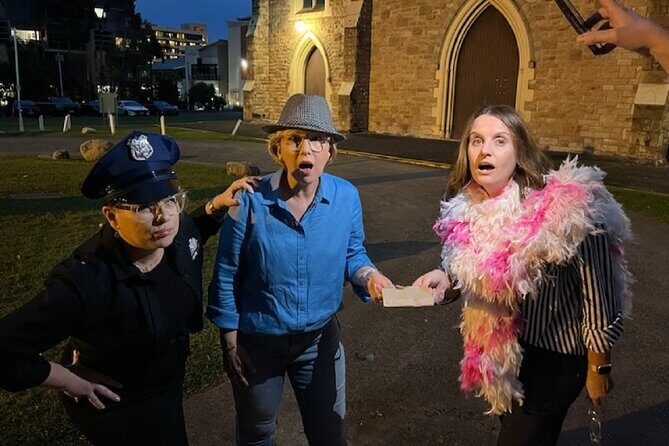
- Crime-sting reenactments, which make the operations easier to understand.
- A real “vice district” vibe, in the same Fortitude Valley streets that earned Bris-Vegas its nickname.
Why Fortitude Valley’s Vice City story hits
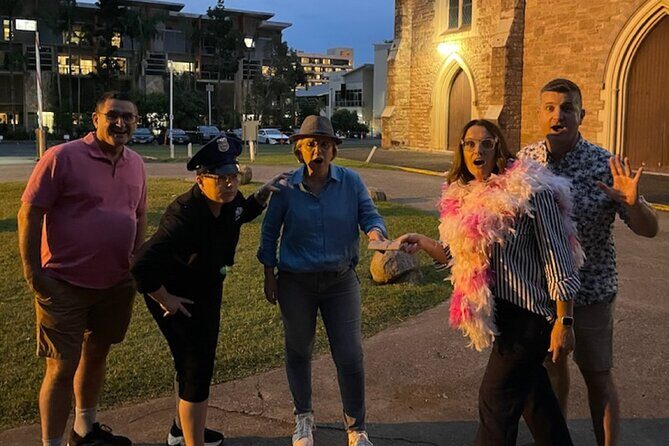
Fortitude Valley has long had a reputation as Brisbane’s after-dark playground. What’s different here is the angle: the tour frames the area like a “lights-on” crime map. You’re not asked to look at history as something abstract. You’re guided to see how glamour, money, and intimidation could fit together street by street.
The tour leans hard into the 1980s, but it doesn’t ignore the earlier shockwaves either. That matters, because a lot of corruption stories grow teeth over time. Start with a major incident, then watch how influence spreads—across clubs, casinos that didn’t exist, and the kinds of operations authorities tried to run.
I also like the tone. It uses dramatic language to keep you interested, but the structure is practical: you’re walking, stopping, learning, and moving on. That means you’re less likely to tune out halfway through, which is my usual problem with true-crime tours that feel like a lecture in costume.
And yes, the “Vice City” framing is playful in a grim way. If you like your travel with a bit of edge—and you don’t mind that the past can be uncomfortable—this is a strong fit.
Other ghost and true crime tours in Brisbane
Your 90-minute walk: pace, stops, and what you’ll notice

The tour is about 1 hour 30 minutes, and it’s designed as a single continuous walking experience. The route starts at Church Street & Wickham Street in Fortitude Valley QLD 4006 and ends back at the same meeting point. That round-trip design is handy. You don’t have to worry about figuring out how to get home from somewhere unfamiliar afterward.
A group size cap of 30 travelers usually keeps things manageable for a guided walk. It’s not marketed like a huge cattle-call experience, and that’s important for true crime. You want to hear the guide’s pacing, not just the loudest person’s reactions.
Another practical detail: you get a mobile ticket, and you receive confirmation at booking. That helps you travel lighter. Bring your ticket on your phone, then focus on shoes, water, and staying present—because the story is tied to where you are standing.
What you should expect to notice as you walk:
- Street-level clues the guide points out as “scenes of the crime.”
- Contrasts between past and present Fortitude Valley.
- Areas connected to nightlife, power, and investigations—where the location isn’t random. It’s part of the plot.
If you’re sensitive to true-crime subject matter, use your judgement. The tour includes violent events and corruption, and it frames them as investigation stories rather than sensational entertainment.
Stop-by-stop: the story beats you’ll get on the ground
The tour’s route is built around a set of themed stops. You won’t just hear names—you’ll be guided to the locations and the logic linking them.
Brisbane as the “scene”: views, secret spots, and context
At the start, your guide takes you back to scenes of the crime and also to secret locations (the kind of spots you’d never choose on your own). You’ll also get breathtaking views, which is a smart move in a tour like this. It gives your brain a reset between heavy story points.
Even though the tour is about crimes and corruption, the placement of views matters. From an elevated look-out or a wide street angle, it becomes easier to understand how nightlife districts attract money—and how that money can attract influence. You’ll probably find yourself thinking in patterns: where people gather, where deals happen, where access is controlled.
“Headquarters” energy: Underworld kingpins of the 1980s
One of the key promises is visiting the Headquarters of the Underworld kingpins of the 1980s. Whether you treat that as literal or symbolic, the takeaway is that you’re meant to understand how the underworld operated like a system. It wasn’t just random bad behavior. It was organized, connected, and strategic.
This is where the tour’s value shows: you learn to ask better questions while you walk. Who had the power? How did they keep it? Where did they do business? How did they protect themselves? The locations help you visualize answers without requiring you to memorize a textbook.
Other city tours we've reviewed in Brisbane





Casinos that didn’t exist: why rumors can be part of control
The tour also includes the location of casinos that didn’t exist. That line is weird in a good way. It signals that corruption doesn’t always look like a blueprint with an obvious paper trail. Sometimes influence spreads through promises, planned ventures, and schemes that never fully materialize—yet still shape decisions around them.
If you’ve ever wondered how crime can control a neighbourhood without always leaving neat, visible evidence, this part helps. A “casino that didn’t exist” becomes a metaphor for how big stories can be used to manipulate people and move money.
Whisky Au Go Go nightclub firebombing (1973): the shock point
The tour drops you into the Whisky Au Go Go Nightclub Firebombing of 1973. That’s a major historical incident, and it’s the kind of event that changes a district’s mood fast. It also anchors the timeline, showing that what peaked in the 1980s didn’t appear out of nowhere.
This stop is likely to feel heavier than the rest. Nightclubs are social spaces—so violence there hits different. The guide’s job is to keep you grounded: what happened, why it mattered, and how it ties into the broader corruption story later.
If you want to process that kind of moment, give yourself a small pause before the next stop. A lot of the power of true-crime walking tours is in how you transition between locations, not just the information itself.
Sting operations reenactment: learning through the mechanics
One of the more entertaining parts of the promise is reenacting sting operations from years gone by. Reenactments can go two ways: either they turn into theater, or they genuinely clarify how investigations worked.
Here, the aim seems practical. Stings are about timing, trust, and controlled access. If the guide explains them clearly, you’ll come away understanding why authorities couldn’t just “catch someone.” They had to create conditions for evidence to appear.
For me, that’s one reason this tour is worth your time: it translates the story from names and headlines into procedures you can picture.
Fitzgerald Inquiry and the Corruption Commission: why it mattered
The final major theme is the history of the Fitzgerald Inquiry’s Corruption Commission. This is where the tour moves from crime locations to accountability. It matters because local corruption stories can otherwise become endless loops of wrongdoing without closure.
Connecting the district to the Inquiry details helps you see cause and effect. How did investigations change what people could do? How did systems respond? You get a clearer sense of what “corruption” meant in practice and not just as an insult.
The Underworld angle: what you really learn
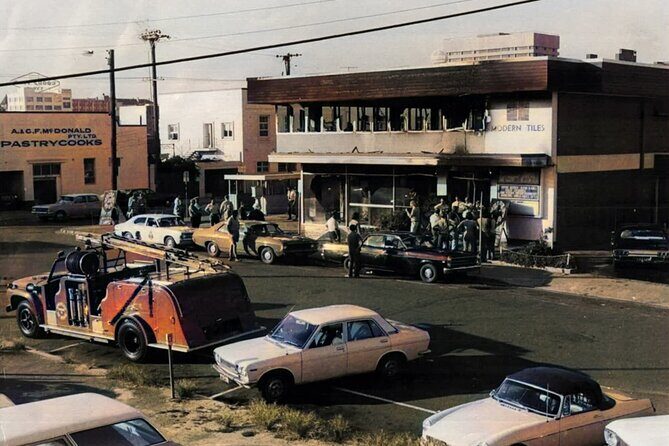
This tour isn’t trying to make you feel like you’re hunting ghosts. It’s trying to make you understand how corruption can become normal—especially in places where money and nightlife move quickly.
The strongest moments likely come from how the guide links:
- Power (who controlled access and opportunity)
- Places (where the action happened)
- Incidents (events that escalated conflict or attention)
- Investigations (how authorities responded)
That structure keeps you from getting lost in sensational details. You can enjoy the Vice City energy without losing your footing in the real timeline.
Price and value: is $24.39 good use of your time?
At $24.39 per person, this is priced like a mid-range city tour, not a premium museum-style experience. For a 90-minute guided walk that covers multiple historical themes, that can be good value—especially if you like storytelling that’s tied to street locations.
Here’s what helps make the price feel reasonable:
- You’re paying for guided interpretation, not just walking around.
- The route includes specific named incidents and a corruption investigation context.
- The group size cap suggests you’re not just part of a crowd.
- You don’t have to coordinate transport at the end because it returns to the meeting point.
Your “value check” is simple: if you like true crime stories that prioritize location-based context and investigation mechanics, you’re likely to feel satisfied. If you only want surface-level gossip and don’t care about the Fitzgerald Inquiry angle, you might want a different kind of tour.
When should you go? Weather, timing, and comfort

The tour requires good weather. That’s common for walking tours, but it’s worth planning around because Fortitude Valley can be humid. If you’re deciding between dates, choose the one with the most reliable conditions.
Wear comfortable shoes. You’ll be walking and stopping, and the experience is about standing in the right spot while the guide explains what happened there. Also, bring water if you get warm easily.
There’s also a practical advantage: it’s near public transportation, and service animals are allowed. Most people can participate, so it’s generally straightforward if you’re able to walk at a normal pace for about 90 minutes.
The best reasons to book (and who it suits)
This is a great fit if:
- You like true crime, but you prefer investigation-style storytelling over pure shock value.
- You’re interested in how corruption is uncovered and what inquiries try to do.
- You want Fortitude Valley context beyond nightlife vibes.
- You enjoy a compact walking route instead of a half-day tour.
It also works well as a first look at an area. Even if you already know Fortitude Valley for food or bars, the tour gives it a second layer: the “how did this place turn into a corruption hotspot?” layer.
The one thing that could bother you

Because the tour focuses on corruption and crime—including a nightclub firebombing—you may find some parts emotionally intense. Also, if you dislike walking tours in general, the format might feel too “on your feet” for your taste. The tradeoff is that you get real location-based context, not a sit-down lecture.
If you’re unsure, think about your tolerance for grim topics. This tour isn’t graphic in the details described here, but the themes are real and heavy.
Should you book Vice City – Fortitude Valley’s True Crime Tour?
I think you should book it if you want a high-interest walk with a clear structure: 90 minutes, real incidents, and corruption investigation context, all in one of Brisbane’s most story-rich neighbourhoods.
Before you buy, do this quick checklist:
- You’re comfortable with crime and corruption as themes.
- You don’t mind standing around at locations while a guide explains context.
- You’ll be able to show up in good weather.
- You’re looking for value near $24.39 for guided, location-based storytelling.
If that sounds like your kind of travel, you’ll probably leave with a much sharper picture of how Fortitude Valley earned its reputation—and how the systems around it responded.
FAQ
How long is the Vice City – Fortitude Valley True Crime Tour?
It runs for about 1 hour 30 minutes.
What does it cost?
The price is $24.39 per person.
Where do I meet the guide?
The tour meets at Church Street & Wickham Street, Fortitude Valley QLD 4006, Australia.
Is there a mobile ticket?
Yes, the tour uses a mobile ticket.
Is the tour suitable for most people?
Yes—most travelers can participate. Service animals are allowed.
What happens if the weather is bad?
The experience requires good weather. If it’s canceled due to poor weather, you’ll be offered a different date or a full refund. You can cancel for a full refund up to 24 hours in advance.